
Setting up a wishlist: A deep dive into exactly how I set it up and use it on a daily basis
a walk through of my take on the wishlist concept.

This is not about WHY you need a wishlist. This is about exactly how I set up and used one to significantly change how I shop and how I think about fashion. While for a slightly different purpose, Emily recently wrote about how she uses her notes app to save and curate her inspiration photos, so go check that one out for more ideas!
Disclaimer: I in no way came up with the concept of a wishlist. This is something that many creators on here use in some shape or form, but I’ve noticed that we all do it a little differently so I thought I’d share how I do it.
Ok let’s get to the good part.
SETTING UP THE WISHLIST
Choose an accessible format: The wishlist needs to be extremely accessible to me at all times - from my phone, laptop, with or without access to internet.
I personally use the notes app. Accessible from everywhere and no fuss. Other good suggestions could be Notion or a Google Doc/Sheet.
What works for me: I keep it pinned to the top of my notes so that it’s extra easy to find.
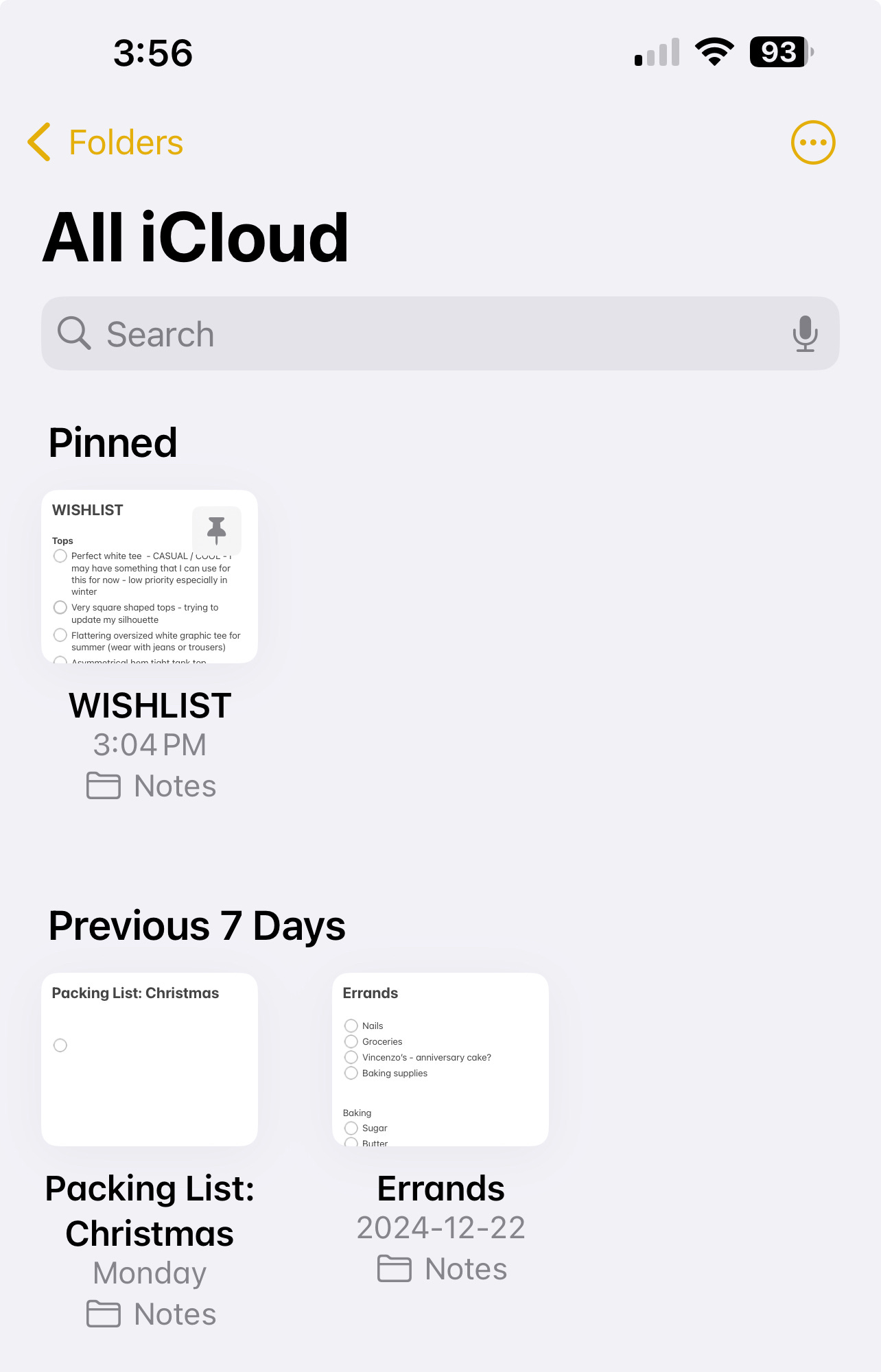
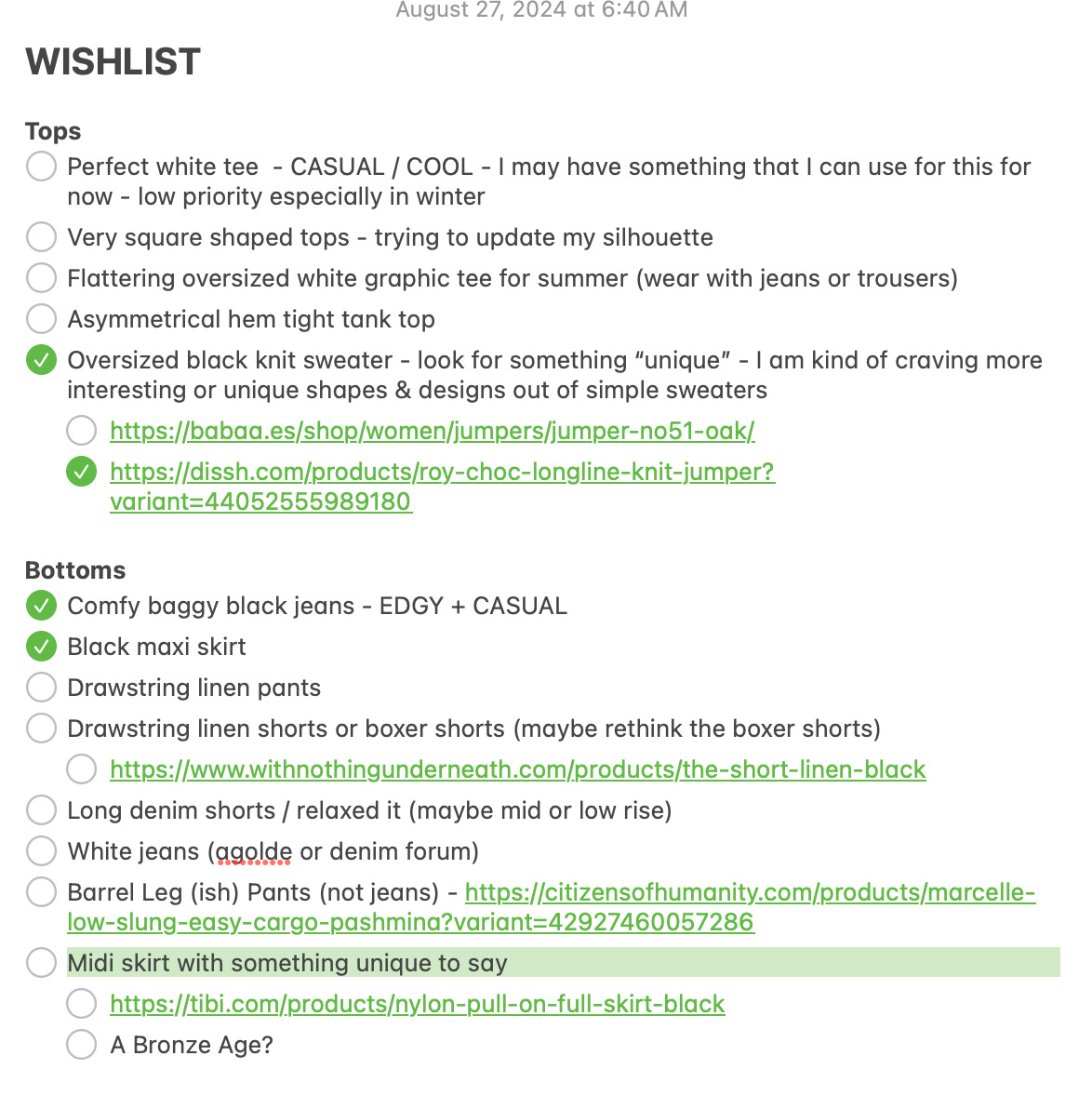
Use check boxes instead of bullets: I like leaving items that I’ve already purchased on the list, but I’ll check them off. This visual representation of what I’ve already purchased causes me to subconsciously audit the “success” of past wishlist purchases every time I scroll through the list.
Organize by category: I originally just had one long running list, but that was just a little too chaotic for me. I find that organizing by simple category (e.g. tops, bottoms, footwear, etc.) allows me to see what I’m craving in my wardrobe and catch if I’m over indexing on a specific type of item. For example, I probably don’t need 20 new pairs of shoes, that’s when I know it’s time for an audit (more on that later)
ADDING ITEMS TO THE LIST
Add the idea, not the link: Instead of a running list of links of specific things to buy, I actually add things to my wishlist in the form of a description of what I want to accomplish.
For example, instead of a link to a specific top, I wrote “asymmetrical hem tight tank top”. This helps me stay connected to the concept and not the specific item that my favourite influencer is wearing.
Don’t be afraid to add descriptors about why you’re drawn to a certain item.
I’ve found this to be incredibly helpful for being really thoughtful about my why for craving a new piece. I’ll inevitably start to add links over time as I find examples that I love.
Regularly audit the list: every few weeks or so I’ll take a look through my current list and remove or update items that I’m no longer drawn to. This is essential for making sure your wishlist doesn’t become an endless and uncurated list of things to buy; after all, the goal is not to buy everything you add, but rather to use it as a tool to discover what is authentic to you.
What works for me: I recently added a “Losing Interest” category at the bottom of the list and have started moving items that I’m starting to become a little ‘meh’ on but don’t feel fully ready to remove.
USING YOUR LIST
Your wishlist ≠ a shopping list: An easy trap to fall into is thinking of your wishlist as a shopping list. Remember that you will not, and should not, end up purchasing every single item on your list! For me, the list is a a tool to achieve 2 main things:
to slow down and resist the urge ‘add-to-cart’ while scrolling
to be very intentional about what I’m adding to my wardrobe and researching options until I find the one that works for me rather than the one I saw on Instagram.
Sit back and wait: I don’t have a set amount of time an item must be on my list before I’ll “allow” myself to buy it, but I would say that at minimum an item should be on my list for about a month before I pull the trigger. The list is just for you and isn’t meant to be performative - there is no gold star for adding an item to your list and immediately purchasing the item. Conversely, if you buy something that’s not on your wishlist - that’s totally ok, we’re all just works in progress after all.
Ultimately, this is the perfect system for me because it works. I would encourage you to find a system that is right for you!
For all you wishlist users out there - do you do something similar? I’d love to hear how others organize and use their concept of a wishlist!